
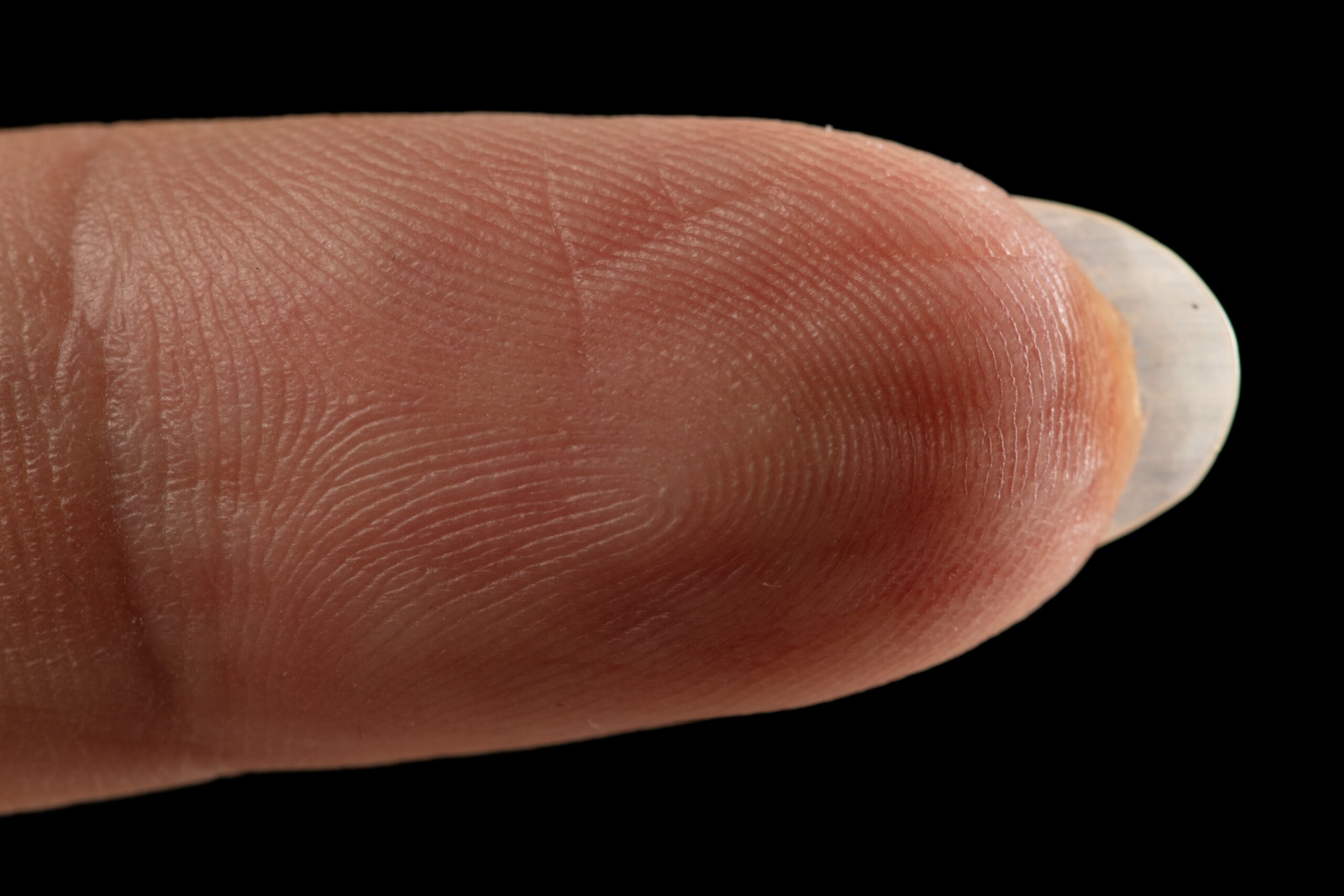
A new peer-reviewed study finds that foreign DNA under fingernails is a routine feature of everyday life. This may have direct implications for how this evidence is presented and challenged in court.
For years, prosecutors have placed considerable weight on DNA found beneath a complainant’s or defendant’s fingernails as evidence of physical struggle or direct contact. A significant new study shows that assumption is far more fragile than courts have been led to believe.
Published in Forensic Science International: Genetics in late 2025, the study examined DNA collected from underneath the fingernails and hand surfaces of 25 individuals going about their ordinary, unrestricted daily lives. No criminal scenarios were staged. No controlled contact was arranged. Participants simply lived normally and then submitted to sampling. The results are striking, and every criminal practitioner handling cases involving fingernail DNA evidence should take note for when a relevant case crosses their desk.
What the research found
The most concerning finding from this research indicates that only 28% of individuals in the study had exclusively their own DNA detected in their fingernail samples. That means nearly three quarters of ordinary people, after a typical day’s activities, already carry someone else’s DNA under their fingernails, without any struggle or scratching.
- 28% of individuals had only their own DNA under their fingernails
- 72% routinely carried another person’s DNA under their fingernails from everyday activity
- 30% had unknown source DNA specifically under the fingernails — that is DNA that did not originate from partner, parents/children or friends
Four findings that matter in court
1. Fingernails and hands retain DNA differently. The study found meaningful differences in DNA composition between under-nail swabs and surface hand deposits from the same individuals. These sites cannot be treated as interchangeable or assumed to carry equivalent evidential weight.
2. Fingernail DNA frequently forms complex mixtures. Mixed DNA profiles — more than one contributor — are common in subungual (under-nail) samples taken from people in the general population. The presence of a mixture does not, on its own, indicate an activity linked to an offence.
3. Mixture inversions can occur. A mixture inversion is when the major and minor DNA contributors in a mixed profile do not correspond to what the prosecution’s theory predicts. While the study found mixture inversions were relatively rare (with non-self DNA typically presenting as a minor component), they do occur and their existence must be accounted for during interpretation.
4. Everyday activities alone deposits foreign DNA. The participants who had no restrictions on their daily routines accumulated non-self DNA. This was not indirect DNA transfer in a theoretical sense — it was the documented reality for the overwhelming majority of people sampled.
The presence of a person’s DNA under someone else’s fingernails does not, in itself, establish when, how, or in what context that DNA was deposited.
Why the existing assumption has been wrong
The courtroom narrative around fingernail DNA has historically run something like this: if the complainant has the accused’s DNA under their fingernails, they must have scratched or clawed at the accused during a struggle. It is direct, compelling, and intuitive. It is also, this research suggests, frequently unsupported by the science. Three alternative explanations for the presence of non-self DNA under fingernails now have scientific data to support the propositions:
Prior innocent contact. The study found that the majority of non-self DNA detected under fingernails was associated with individuals known to the participants including cohabitants, partners, family members, colleagues. Everyday physical contact is sufficient to transfer DNA that persists under fingernails.
Indirect transfer. DNA does not require direct person-to-person contact to move. It can transfer via surfaces, objects, or intermediate parties. A shared towel, a frequently touched door handle, or grooming of another person can all result in subungual DNA deposits that bear no relationship to any criminal event.
Accumulated background DNA. Perhaps most significantly for defence practice: fingernails accumulate DNA over time from a variety of sources. Without baseline sampling before any alleged incident, it is impossible to determine whether DNA found under a person’s fingernails was present before, during, or after the events in question.
What this means for your practice
Practical implications for defence practitioners:
- Challenge the bare assertion that fingernail DNA equals recent, direct physical contact. The science no longer supports that as a default inference.
- Request disclosure of the full DNA profile analysis — this will allow assessment of the DNA profile and not merely whether a match was found, but the mixture complexity, major/minor contributor ratios, and whether a mixture inversion was observed or excluded.
- Explore the relationship between the complainant and the accused before the alleged incident. Innocent prior contact — including shared spaces, social settings, professional environments — provides a legitimate alternative explanation.
- Consider instructing an independent forensic expert to assist in disclosing the limitations to the evidence.
- In cases where the prosecution relies heavily on fingernail DNA, consider whether the forensic expert’s evidence addresses the alternative of innocent transfer. If it does not, that gap may be exploitable in cross-examination.
Further Reading
Author Bio

Jae Gerhard is a Forensic DNA Expert and the Principal Forensic Scientist at Independent Forensic Services, bringing over two decades of frontline experience in forensic biology.
Specialising in DNA analysis, STRmix™, biological fluid examination, and bloodstain pattern interpretation, Jae now works independently with criminal defence teams to review and challenge forensic evidence. Her mission is simple: to ensure the science presented in court is accurate, balanced, and truly understood.
DNA Expert Witness Testimony
We’re passionate about ensuring forensic biology and DNA evidence is presented to the courts in an impartial, yet comprehensive manner, and that potentially misleading evidence isn’t relied upon. We also want our clients to understand the strengths and limitations of forensic evidence in their cases.
Independent
As an independent forensic service provider, we offer unbiased and impartial analysis. Our independence guarantees that our findings are based solely on scientific evidence, free from external influences. This objectivity is crucial in ensuring the credibility and reliability of our forensic reports.
Confidential
We understand the sensitive nature of forensic investigations. Confidentiality is a cornerstone of our services. We handle all cases with the highest level of discretion, ensuring that your privacy and the integrity of the investigation are maintained at all times.
Trusted
Integrity is at the heart of everything we do. We are committed to ethical practices and uphold the highest standards of honesty and transparency in all our investigations. You can trust that our findings are accurate, thoroughly vetted, and presented with complete integrity.
Professional
Our team adheres to the highest standards in forensic science, ensuring that every case is handled with the utmost care and precision. We strive for excellence in all our services, providing reliable and accurate forensic analysis.
Highly Experienced
Our team comprises forensic experts with extensive experience across various forensic disciplines. With years of practical experience and advanced training, our professionals bring a wealth of knowledge to each investigation. This expertise ensures that we deliver top-tier forensic solutions tailored to your specific needs.
Approachable
We work closely with you, offering guidance and support throughout the investigation, ensuring you feel confident and informed. Our team is approachable and dedicated to making the forensic process understandable and straightforward.
Get Started
Choosing Independent Forensic Services means partnering with a team that values professionalism, experience, approachability, independence, confidentiality, and integrity. Trust us to provide the forensic expertise you need to achieve justice.
How We Can Help You
With Independent Forensic Services, you gain access to a team of experts.




An Expert Team Lead by Jae Gerhard
Jae Gerhard is a Forensic DNA Expert and the Principal Forensic Scientist at Independent Forensic Services, bringing over two decades of frontline experience in forensic biology. She has worked on some of Australia’s most complex and high‑profile cases with the Australian Federal Police and New South Wales Police, including the Special Commission of Inquiry into LGBTIQ Hate Crimes, National Crime Authority bombing, Claremont serial killer case, Lin Family murders, murder of Michelle Beets as well as international disaster victim identification operations such as the 2002 Bali Bombing, 2003 Australian Embassy bombing and 2004 Asian tsunami.
Specialising in DNA analysis, STRmix™, biological fluid examination, and bloodstain pattern interpretation, Jae now works independently with criminal defence teams to review and challenge forensic evidence. Her mission is simple: to ensure the science presented in court is accurate, balanced, and truly understood.